
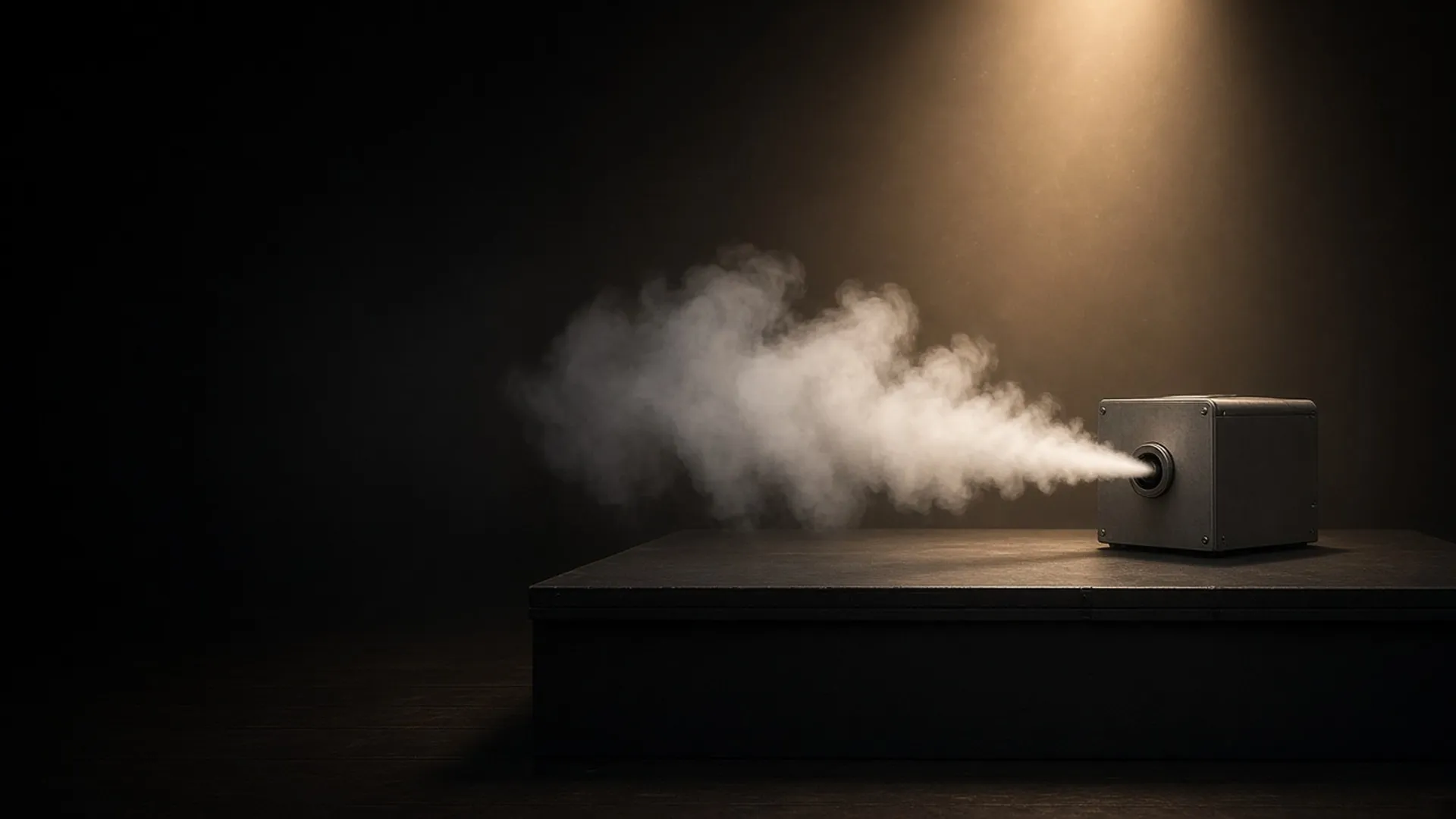
How fog machines work
A tank, a pump, a heater, and a hot nozzle.
Disclosure: We may earn a commission if you buy through links on this page. It does not change what we recommend. Affiliate Disclosure
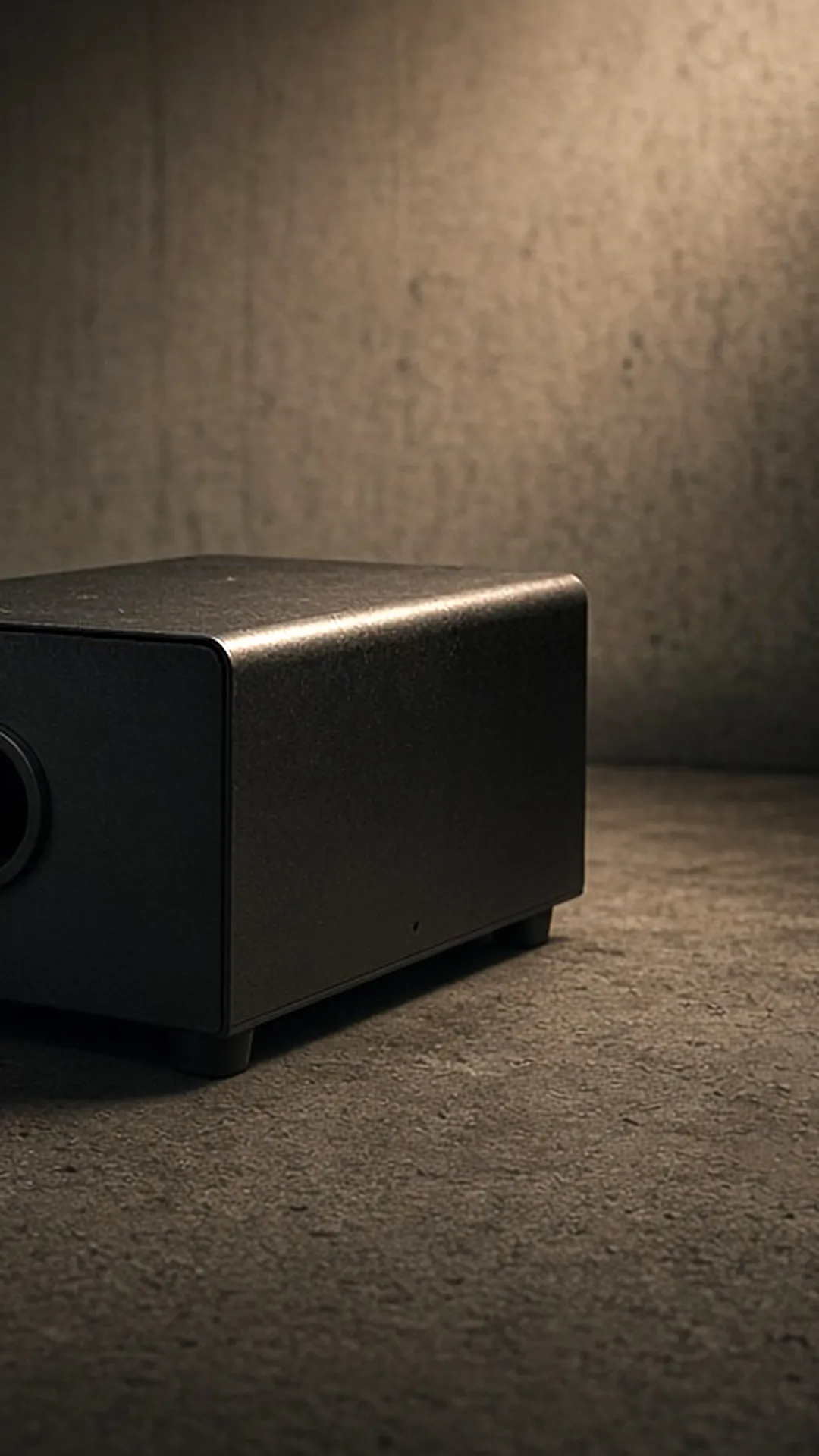
The parts
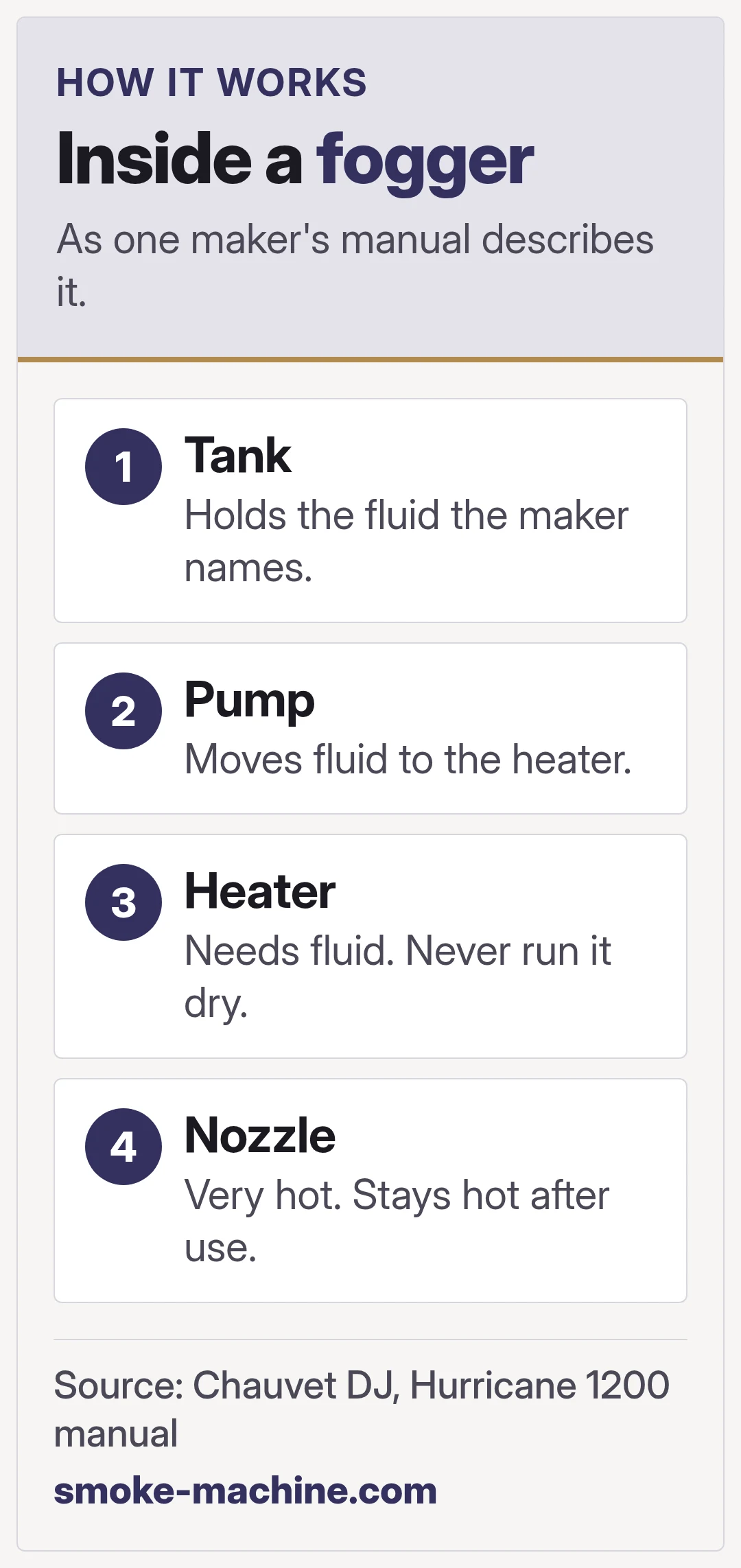
One maker's manual describes a fluid tank, a pump, and a heater. It warns that running without fluid can damage the pump and heater, and that the nozzle is very hot in use and stays hot for a long time afterward.
What comes out
ANSI E1.5 defines fog as a liquid aerosol in air that reduces visibility and reflects light. HSE guidance describes machines that force compressed air through mineral oils or glycol to make smoke or a misting effect.
Smoke is the everyday word
People say "smoke machine", but these effects do not come from burning. HSE lists burned pyrotechnic smoke as a separate kind of effect.
Start with the manual
Warm-up time, fluid, output, and controls differ by machine. Your machine's manual is the authority.
Sources: Chauvet DJ, Hurricane 1200 User Manual; HSE, Smoke and vapour effects used in entertainment (ETIS3); ESTA, ANSI E1.5-2009 (reaffirmed 2024), Theatrical Fog. Brand names belong to their owners. We are not affiliated with or endorsed by them.
FAQ
General information only. Follow your machine's manual and the label on any fluid. Fog and haze can set off smoke alarms and make it hard to see. Never disable an alarm. Check the venue's or building's rules before you use any effect. Dry ice can cause frostbite and gives off carbon dioxide, which can build up in low or enclosed spaces. Never touch it with bare hands, never seal it in a container, use it only with good ventilation, and keep it away from children and pets. Anyone with asthma or another breathing condition should ask a doctor before being around fog, haze, or dry ice effects.
Next: fog vs haze
Two effects, two machines.
