

Low-lying fog and dry ice
Fog that hugs the floor, and the hazards that come with it.
Disclosure: We may earn a commission if you buy through links on this page. It does not change what we recommend. Affiliate Disclosure
What dry ice fog is
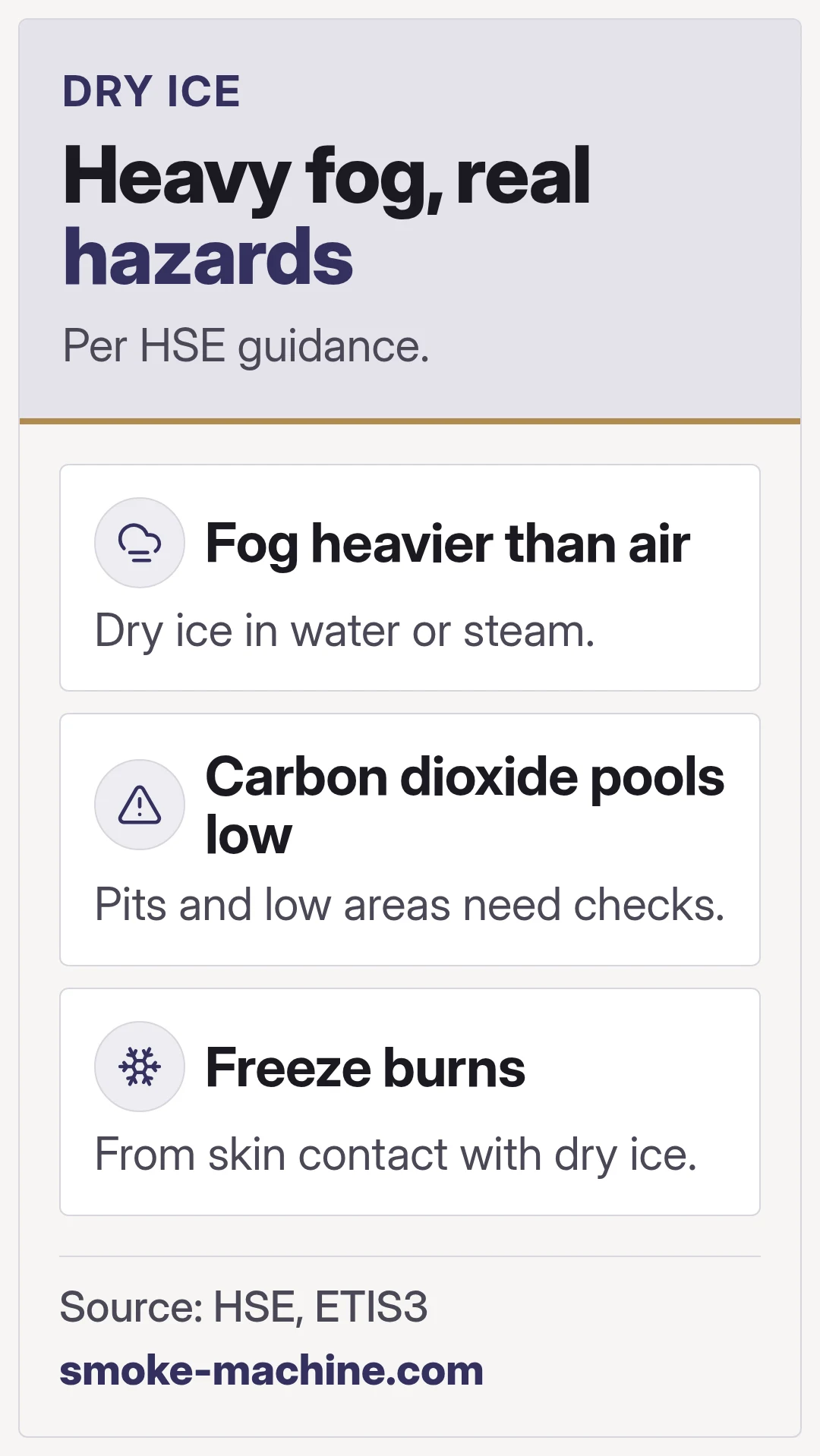
HSE guidance describes dry ice as carbon dioxide immersed in water or steam to produce a fog heavier than air.
The hazards HSE lists
Freeze burns or frostbite from skin contact with dry ice; asphyxiation from high concentrations of carbon dioxide; and slips from condensation.
Low areas
HSE says to make sure carbon dioxide cannot pool in low-lying areas such as orchestra pits, where people are likely to be. It says these areas should be monitored and, where possible, access prevented.
Low-lying fog machines
Some machines make fog that stays low without dry ice. How they do it, and which fluid they need, is in the maker's manual.
At home
We do not give home dry ice instructions. The CDC warns never to handle dry ice with bare hands, never to store it in a tightly sealed container because it can burst, and to use it only in a well-ventilated room, because carbon dioxide can replace oxygen in closed spaces and cause suffocation. If you use any low-lying effect, follow the maker's manual and keep people and pets out of low, enclosed spaces where it gathers.
FAQ
General information only. Follow your machine's manual and the label on any fluid. Fog and haze can set off smoke alarms and make it hard to see. Never disable an alarm. Check the venue's or building's rules before you use any effect. Dry ice can cause frostbite and gives off carbon dioxide, which can build up in low or enclosed spaces. Never touch it with bare hands, never seal it in a container, use it only with good ventilation, and keep it away from children and pets. Anyone with asthma or another breathing condition should ask a doctor before being around fog, haze, or dry ice effects.


Next: fog vs haze
Two effects, two machines.
