
Smoke detector types
Ionization, photoelectric, and dual-sensor alarms.
Disclosure: We may earn a commission if you buy through links on this page. It does not change what we recommend. Affiliate Disclosure
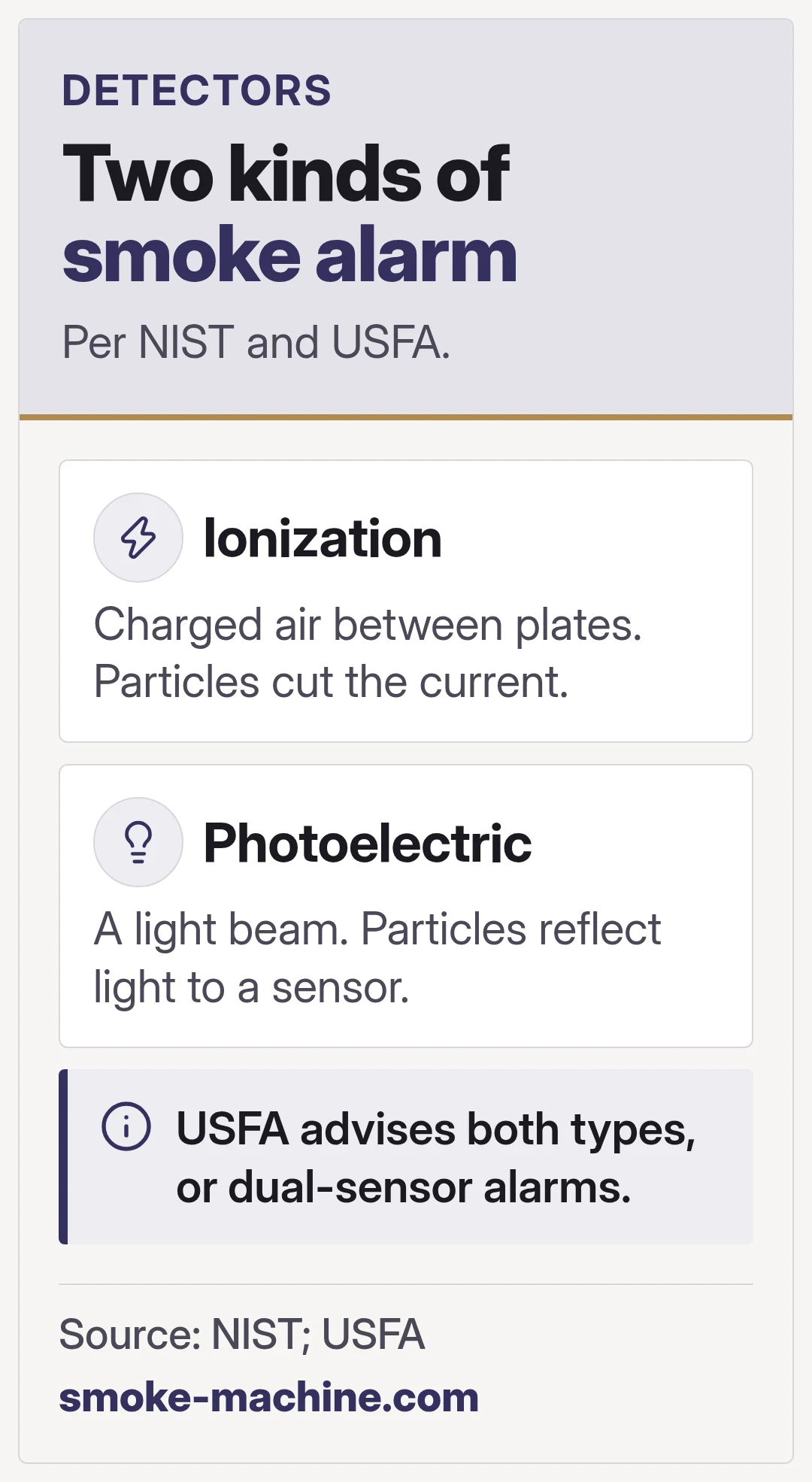
Ionization
NIST explains that ionization detectors charge the air between two plates so a small current flows. Particles entering the chamber reduce the current, and the alarm sounds.
Photoelectric
NIST explains that photoelectric detectors use a light beam. Particles reflect light onto a sensor, and the alarm sounds.
Both, or dual-sensor
USFA recommends both ionization and photoelectric alarms, or dual-sensor alarms, in every home and place where people sleep.
Heat detectors
Some buildings also use heat detectors. Ask the building or venue what is installed.
For fog users
NIST explains that smoke alarms sense particles in the air, so fog may set them off. Plan with whoever manages the system. Fog and smoke alarms
FAQ
General information only. Follow your machine's manual and the label on any fluid. Fog and haze can set off smoke alarms and make it hard to see. Never disable an alarm. Check the venue's or building's rules before you use any effect. Dry ice can cause frostbite and gives off carbon dioxide, which can build up in low or enclosed spaces. Never touch it with bare hands, never seal it in a container, use it only with good ventilation, and keep it away from children and pets. Anyone with asthma or another breathing condition should ask a doctor before being around fog, haze, or dry ice effects.
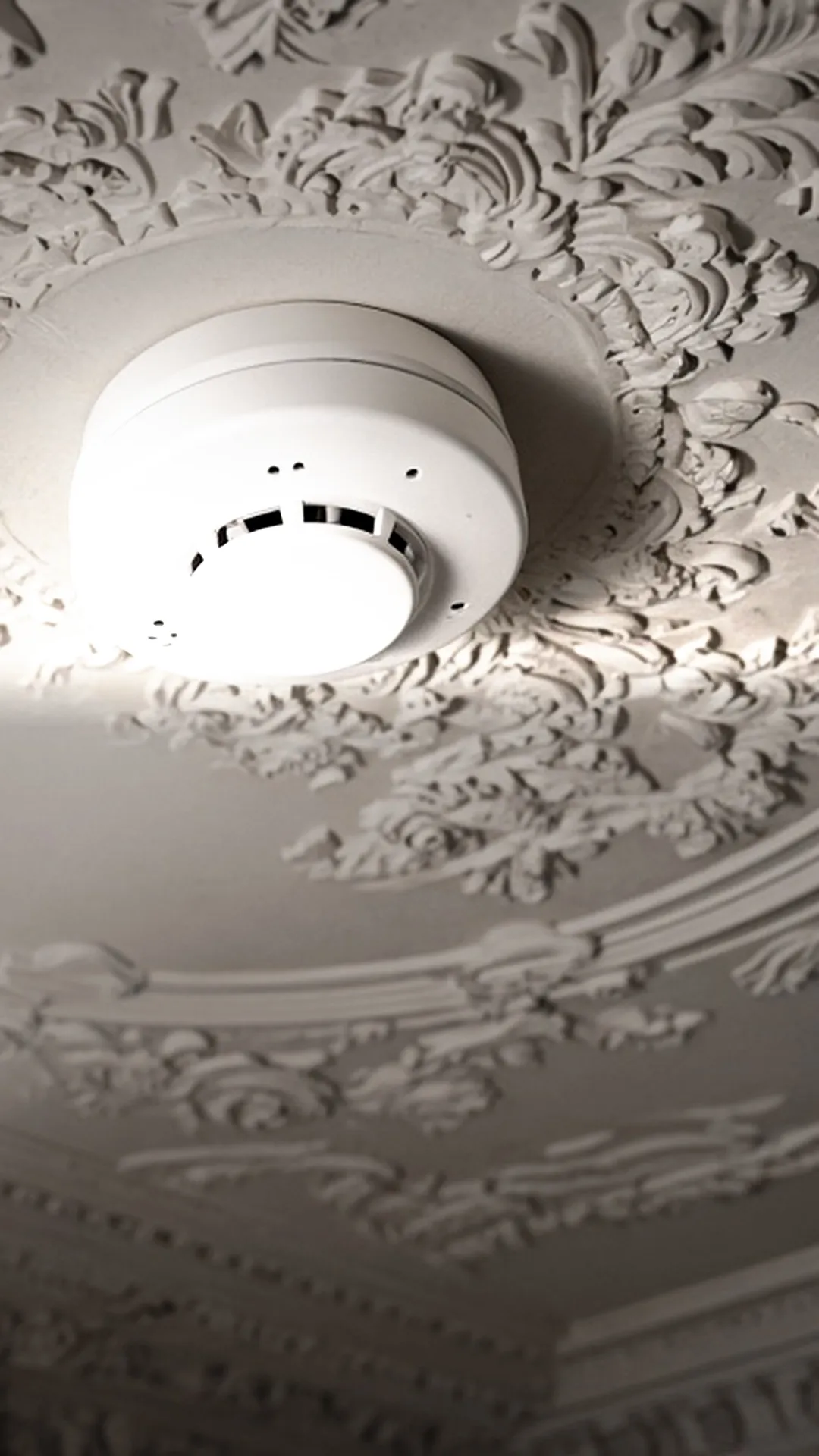


Next: fog and smoke alarms
Plan first. Never disable.
